
Morocco Tours: The Complete Guide to Routes, Regions & Departure Hubs
Planning a journey across Morocco requires understanding its geography: four distinct mountain ranges, two coastlines, nine UNESCO World Heritage sites, and vast Sahara ergs separated by dramatic mountain passes. Use this practical guide to compare departure cities, realistic driving hours, seasonal climates, and route logistics before choosing your itinerary.
Marrakech, Fes, Casa, Tangier
Medinas, Kasbahs & Volubilis
Erg Chebbi & Erg Chigaga
Rif, Middle, High & Anti-Atlas
3–4d Desert | 7–14d Full Loop
Mar–May & Sep–Nov
Complete Morocco Tours Knowledge Hub (12 Essential Topics)
Morocco Tours by Departure City: Marrakech, Fes, Casablanca & Tangier
Your arrival airport or ferry port determines which landscapes you can reach comfortably without excessive backtracking. Below is how each of Morocco’s four primary departure gateways functions—along with direct links to our dedicated route collections for each city.
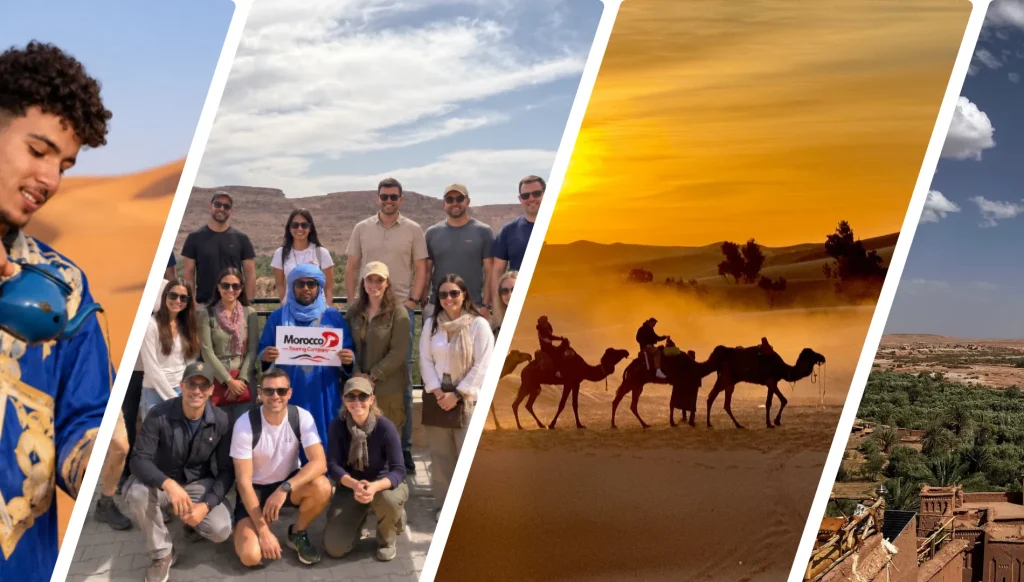
Tours from Marrakech
Best for crossing the High Atlas via Tizi n’Tichka (2,260m) to Ait Ben Haddou, Dades & Todra Gorges, and the Sahara dunes of Merzouga or Zagora—plus quick access to Essaouira and Imlil.
Ideal Length: 1-Day Trips or 3–5 Day Desert Loops
Key Stops: Ouarzazate, Dades Valley, Erg Chebbi
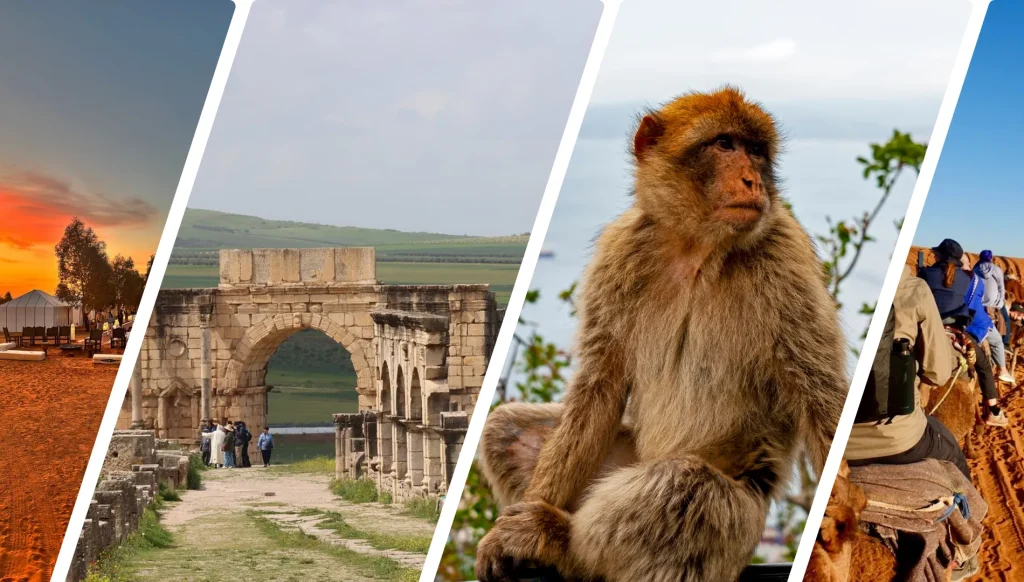
Tours from Fes
Offers the most direct overland route to the Erg Chebbi dunes (~7 hours via Ifrane’s cedar forests and Ziz Valley), making 2-day round-trips or 3-to-5-day Fes-to-Marrakech transfers effortless.
Ideal Length: 2–5 Days (One-Way or Round-Trip)
Key Stops: Azrou Cedar Forest, Midelt, Ziz Oasis
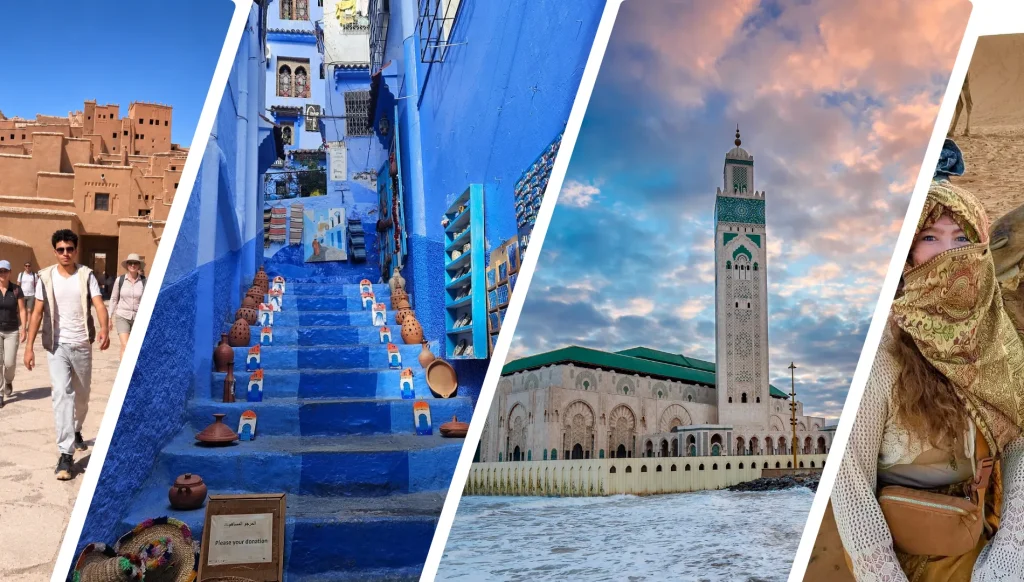
Tours from Casablanca
Morocco’s primary long-haul flight gateway (Mohammed V Airport). Best suited for 7-to-14-day grand loops connecting Hassan II Mosque, Rabat, Meknes, Volubilis, Fes, the Sahara, and Marrakech.
Ideal Length: 7–14 Day Complete Morocco Circuits
Key Stops: Rabat, Volubilis, Fes, Merzouga, Marrakech
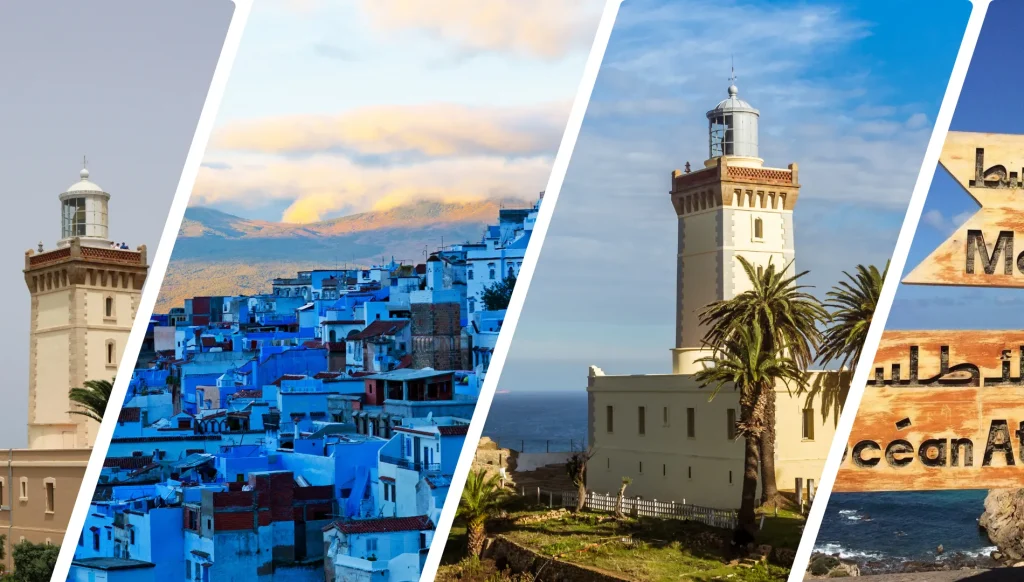
Tours from Tangier
The natural starting point if arriving by ferry from Spain (Tarifa/Algeciras) or northern flights. Combines Chefchaouen (the Blue City), Tetouan, and Fes before continuing south to the Sahara and Marrakech.
Ideal Length: 5–12 Day North-to-South Routes
Key Stops: Chefchaouen, Fes, Sahara, Marrakech
Understanding Morocco's 5 Distinct Touring Regions
Despite being roughly the size of California, Morocco packs extraordinary topographic diversity into compact corridors. Because mountain ranges bisect the country from southwest to northeast, a single multi-day overland route can transition from Mediterranean coastal cliffs to cedar-forested alpine plateaus, arid pre-Saharan river gorges, and towering sand dunes.
The Four Imperial Cities (Fes, Marrakech, Meknes, Rabat)
Each of Morocco's four historical capitals reflects a distinct ruling dynasty—from the Marinid madrasas and car-free medieval alleys of Fes el-Bali to the Almohad minarets of Marrakech, the monumental gates of Meknes, and the coastal Andalusian kasbah of Rabat. All four historic centres are inscribed on the UNESCO World Heritage List for Morocco.
The High Atlas & Middle Atlas Mountains
Acting as a climatic barrier between the humid Atlantic coast and the Sahara, the Atlas Mountains are home to indigenous Amazigh (Berber) communities, terraced walnut valleys, and North Africa's highest peak, Jebel Toubkal (4,167m). Travellers with limited days often explore the foothills via a day trip from Marrakech to Imlil or cross the range via the 2,260m Tizi n'Tichka pass.
The Pre-Saharan Kasbahs & River Gorges
South of the High Atlas lies the "Road of a Thousand Kasbahs," defined by fortified earthen villages (ksour) built from rammed red clay and straw along palm-lined oases. Key stops include UNESCO-listed Kasbah Ait Ben Haddou, Ouarzazate's cinema studios, the winding hairpin bends of the Dades Valley, and the 300-metre limestone canyon walls of Todra Gorge.
The Sahara Desert (Merzouga & Zagora)
While rocky desert plateaus (hammada) cover much of southeastern Morocco, classic wind-sculpted sand dunes (ergs) are concentrated in two main areas: Erg Chebbi near Merzouga and Erg Chigaga south of Zagora. Both offer sunset camel treks, sandboarding, and overnight stays in traditional or luxury desert camps.
The Rif Mountains & Atlantic Coastline
In the north, the limestone Rif range shelters the famous blue-washed medina of Chefchaouen and the Roman ruins of Volubilis. Along the Atlantic shore, historic fortified ports like Essaouira and El Jadida offer mild ocean breezes, Portuguese ramparts, and fresh Atlantic seafood—ideal for balancing inland desert heat.
Private Tours vs. Small Group Coach Tours vs. Self-Driving in Morocco
Before comparing itineraries, decide how you want to move across the country. A key economic fact most booking sites overlook: group tours are priced per seat, whereas private tours are priced primarily per vehicle. For couples wanting flexibility—or families and groups of 3 to 6—a private vehicle with a local driver frequently matches or beats per-seat coach pricing while eliminating fixed 6:00 AM schedules and forced souvenir-shop stops.
| Factor | Private Tour with Driver | Small-Group / Shared Tour | Independent / Rental Car |
|---|---|---|---|
| Cost Structure | Per-vehicle base; drops sharply per person for 3–6+ travellers. | Fixed per-seat price; most economical for solo travellers. | Car rental + fuel + tolls + insurance + separate riads. |
| Schedule & Stops | 100% custom departure times, photo breaks, and lunch spots. | Fixed departure dates, strict timetables, shared hotel pickups. | Total freedom, but navigation and parking in medinas is stressful. |
| Mountain & Desert Driving | Zero stress—licensed local driver handles Atlas passes & checkpoints. | Handled by coach driver, though larger buses move slower on passes. | Demanding on Tizi n'Tichka switchbacks, rural radar traps & night roads. |
| Best Suited For | Couples, families, seniors, photographers & custom routes. | Solo travellers seeking social groups & lowest entry price. | Experienced international drivers staying on main coastal highways. |
Realistic Driving Distances & Travel Times in Morocco
A common mistake when planning a Morocco itinerary is relying solely on straight-line mileage. While modern expressways connect Tangier, Rabat, Casablanca, Fes, and Marrakech (allowing fast transit or ONCF Al Boraq high-speed rail travel between coastal cities), mountain and desert roads require winding switchbacks and lower speed limits. Always plan using actual driving hours rather than kilometres.
| Route Corridor | Distance | Pure Drive Time | Road Type & Terrain | Recommended Pacing |
|---|---|---|---|---|
| Marrakech → Ait Ben Haddou / Ouarzazate | ~195 km | 3.5 – 4 Hours | N9 Mountain Highway (Tizi n'Tichka Pass 2,260m) | Day trip or Night 1 stop toward Sahara |
| Ouarzazate → Merzouga (Erg Chebbi) | ~370 km | 5.5 – 6 Hours | N10 Oasis & Gorge Route (Dades & Todra) | Split over 1–2 nights for gorge walks |
| Fes → Merzouga (Erg Chebbi) | ~465 km | 7 – 7.5 Hours | N13 Middle Atlas & Ziz Valley Highway | 1 full scenic travel day (or stop in Midelt) |
| Marrakech → Essaouira | ~190 km | 2.5 – 3 Hours | R207 Straight Paved Coastal Road | Easy 1-day trip or 2-night coastal stay |
| Marrakech → Ouzoud Waterfalls | ~150 km | 2.5 – 3 Hours | Tadla Plain & Middle Atlas Foothills | 1-day private excursion |
| Tangier → Chefchaouen → Fes | ~310 km | 5.5 Hours total | Rif Mountain Winding Roads (2h + 3.5h) | 1–2 nights in Chefchaouen en route to Fes |
| Casablanca → Rabat → Fes | ~295 km | 3.5 Hours | A1 & A2 Modern Multi-Lane Autoroute | Fast highway with Rabat & Meknes stops |
Sahara Desert Tours: Erg Chebbi (Merzouga) vs. Erg Chigaga (Zagora)
Nearly every multi-day Morocco tour includes an overnight Sahara experience, yet travellers are often unsure which dune field suits their timeframe. Here is an objective side-by-side breakdown of Morocco’s two premier Sahara destinations:
Erg Chebbi (Merzouga)
Tallest Dunes (150m)Dune Height & Scenery: Iconic, knife-edged golden-orange dunes soaring up to 150 metres high along a 28 km stretch near the Algerian border.
Road Accessibility: Paved road reaches right to Merzouga village; accessible via standard air-conditioned minivan or 4×4, followed by a 45–60 min camel ride into camp.
Best Departure Cities: Accessible from both Marrakech (3+ days) and Fes (2+ days), making it ideal for one-way Fes-to-Marrakech routes.
Camp Infrastructure: Wide choice of traditional Berber bivouacs and luxury en-suite desert tents with hot showers and solar power.
Erg Chigaga (M'Hamid / Zagora)
Remote & Wild (60m)Dune Height & Scenery: Expansive, untouched sea of rolling dunes reaching 60 metres high across 40 km of wide Draa Valley frontier.
Road Accessibility: Requires a dedicated 4×4 vehicle for a 2-hour off-road piste drive past M'Hamid El Ghizlane and the dried Lake Iriki bed.
Best Departure Cities: Primarily accessed from Marrakech via Ouarzazate and the palm-filled Draa Valley (minimum 3 days recommended; 2-day Zagora trips only reach smaller dunes).
Camp Infrastructure: Fewer, widely spaced boutique camps offering deep silence, minimal light pollution, and off-grid expedition appeal.
How Many Days Do You Need? Proven Morocco Tour Blueprints
Instead of packing too many cities into a tight window, use these four realistic duration models to structure your trip around relaxed sightseeing and daylight driving.
The Classic Sahara Express (Marrakech ↔ Merzouga or Fes)
Day 1: Cross the High Atlas via Tizi n'Tichka, tour Kasbah Ait Ben Haddou, and overnight in Dades Valley.
Day 2: Walk Todra Gorge, continue to Merzouga for a sunset camel trek and night in an Erg Chebbi desert camp.
Day 3: Sunrise over the dunes, then either return to Marrakech (~9h) or transfer north through the Ziz Valley and cedar forests to Fes (~7.5h).
Unrushed Desert & Gorge Immersion
Adding two extra days transforms the Sahara run from long driving days into an immersive cultural journey. Includes a full day in Merzouga to visit nomadic families and Gnawa musicians in Khamlia, plus slower overnight stops in Rose Valley, Skoura Oasis, or Telouet Kasbah.
Imperial Capitals & Sahara Loop (From Casablanca or Marrakech)
Combines 2 nights in Fes (with a local medina historian), 1 night in the Sahara Desert, 1 night in Dades/Ouarzazate, and 2–3 nights in Marrakech—with en-route visits to Rabat's Hassan Tower, Roman Volubilis, and Meknes.
North-to-South Grand Tour (Tangier, Chefchaouen, Fes, Sahara, Marrakech & Coast)
The complete Moroccan mosaic: start in Tangier or Casablanca, spend 2 nights in blue-walled Chefchaouen, explore Fes, camp in Erg Chebbi, cross the High Atlas to Marrakech, and finish with 2 nights on the Atlantic coast in Essaouira.
How Much Does a Morocco Tour Cost in 2026/2027?
| Tour Duration & Type | Standard / Comfort | Boutique Mid-Range | 5-Star Luxury |
|---|---|---|---|
| 1-Day Private Excursion (from Marrakech) | €23 – €55 (Groups 6–17) | €80 – €125 (2–4 Pax) | €150 – €220 (VIP / Private Lunch) |
| 3–4 Day Sahara Desert Tour (Merzouga) | €280 – €420 / person | €430 – €650 / person | €750 – €1,200 / person |
| 7–8 Day Imperial Cities & Desert | €650 – €950 / person | €950 – €1,500 / person | €1,700 – €2,800+ / person |
| 10–14 Day Grand All-Morocco Circuit | €1,050 – €1,450 / person | €1,500 – €2,300 / person | €2,600 – €4,500+ / person |
▰ Typical Monument Entrance Fees (2026)
♟ 5 Practical Ways to Lower Your Tour Cost
1. Travel as 4–6 People: Splitting the private 4×4/minivan and driver cost is the single largest per-person savings lever.
2. Book Shoulder Months: Late November, January–February, and May trim 10–20% off riad rates compared to Easter and October.
3. Mix Lodging Tiers: Splurge on a luxury Sahara camp and boutique riads in Marrakech/Fes while choosing clean mid-range kasbahs on transit nights.
4. Avoid Empty Repositioning: Starting and ending in the same hub (or booking popular one-way Fes↔Marrakech legs) keeps vehicle costs lean.
5. Book Directly with a Local Operator: Bypassing international resellers avoids 20–30% agency markups while keeping money in local Moroccan communities.
Where You Will Stay: Riads, Historic Kasbahs & Sahara Desert Camps
Instead of packing too many cities into a tight window, use these four realistic duration models to structure your trip around relaxed sightseeing and daylight driving.
Traditional Courtyard Riads
A riad is a historic Moroccan townhouse built around an inward-facing courtyard garden with orange trees, zellij tilework, and a rooftop terrace. Found inside the pedestrian medinas of Marrakech, Fes, Essaouira, and Chefchaouen, riads typically hold 5–12 rooms and offer far more intimacy and architectural charm than modern chain hotels.
Kasbah Hotels & Mountain Gîtes
Along the Dades Valley, Skoura Oasis, and Todra Gorge, travellers stay in restored earthen kasbah guesthouses featuring thick rammed-clay walls that stay naturally cool, swimming pools framed by palm groves, and home-cooked half-board dinners. In High Atlas villages like Imlil, family-run mountain lodges (gîtes) offer sweeping peak panoramas.
Standard vs. Luxury Desert Camps
Standard nomad camps provide private woven tents with real mattresses, blankets, and shared flush bathrooms/showers. Luxury desert camps upgrade to spacious suite tents with king beds, private en-suite hot showers, solar lighting, and gourmet multi-course dining around the fire under the Milky Way.
When Is the Best Time to Tour Morocco?
Because Morocco spans coastal plains, 2,000m+ mountain passes, and hyper-arid desert basins, weather varies dramatically by elevation and season. You can verify official regional forecasts via the Moroccan National Tourist Office (Visit Morocco) or plan using the seasonal breakdown below:
Spring (March – May)
Daytime: 22°C – 28°C (72°F – 82°F)
Arguably the finest window nationwide. Almond and rose valleys bloom in the Atlas foothills, desert days are warm without extreme heat, and waterfalls like Ouzoud run at peak snowmelt volume.
Summer (June – August)
Inland: 36°C – 45°C | Coast: 24°C
Marrakech, Fes, and the Sahara experience intense midday heat. Summer travellers thrive by focusing on Atlantic towns (Essaouira, Tangier, Asilah), High Atlas treks in Imlil, and air-conditioned private transport with early starts.
Autumn (Sept – Nov)
Daytime: 21°C – 29°C (70°F – 84°F)
Crisp visibility, golden afternoon photography light, date harvests in the Draa and Ziz oases, and pleasant temperatures across both the Imperial Cities and Sahara dunes.
Winter (Dec – Feb)
Days: 16°C – 21°C | Desert Nights: 2°C
Bright, sunny daytime skies in the Sahara (around 18°C–20°C) with snow-capped High Atlas peaks. Desert nights drop near freezing, so insulated camp tents and warm layers are essential.
Visas, International Airports, Connectivity, Ramadan & Food Guide
Visas & Major Airports
Citizens of the USA, UK, EU, Canada, Australia, and New Zealand enjoy 90-day visa-free entry with a valid passport (no advance e-visa needed). Long-haul direct flights land primarily at Casablanca (CMN) and Marrakech (RAK), while European budget carriers also serve Fes (FEZ), Tangier (TNG), and Agadir (AGA).
Mobile Data, SIM Cards & Electricity
Buy a local Maroc Telecom or Orange tourist SIM card directly in the airport arrivals hall (approx. 100–200 MAD for 10–20 GB of 4G/5G data) or activate a travel eSIM before landing—Maroc Telecom has the strongest signal in rural Atlas and Sahara regions. Power outlets use European Type C & E plugs (220V / 50Hz).
Travelling During Ramadan
Tours operate smoothly throughout Ramadan, and evening streets come alive after sunset (Iftar) with festive food markets and warm hospitality. Tourist-oriented restaurants, riads, and highway stops remain open for lunch, though smaller local cafés close during daylight fasting hours and alcohol is less widely served.
Moroccan Cuisine & Dietary Needs
Expect slow-cooked tagines, Friday couscous, pastilla, harira soup, and fresh mint tea. Morocco is naturally welcoming for vegetarians, vegans, and gluten-free travellers—vegetable tagines, chickpea stews, grilled meats, and fresh salads are available everywhere (simply alert your tour operator in advance for desert camp dinners).
Practical Morocco Tour Logistics: Currency, Packing & Cultural Etiquette
Instead of packing too many cities into a tight window, use these four realistic duration models to structure your trip around relaxed sightseeing and daylight driving.
Currency, Cash & Daily Costs
Morocco uses the Moroccan Dirham (MAD), a closed currency best withdrawn at bank ATMs upon airport arrival (approx. 10–11 MAD = €1 / $1.08 USD). While boutique riads and major restaurants accept cards, rural kasbahs, roadside cafés, souk artisans, and mountain villages operate almost exclusively in cash.
Daily Out-of-Pocket Budget: On a private tour where transport, accommodation, breakfast, and desert dinners are covered, budget roughly 150–250 MAD (€15–25) per person/day for lunches, bottled water, monument tickets, and customary tips.
Tipping Etiquette: Not mandatory, but customary for good service: plan 100–150 MAD/day for your private driver, 100–200 MAD for a half/full-day city guide, 50 MAD for your desert camel handler, and 10% at sit-down restaurants.
What to Pack for Multi-Climate Tours
Breathable Layers: Loose cotton or linen shirts paired with a warm fleece or light down jacket for cold desert mornings and High Atlas passes.
Footwear: Closed-toe walking shoes with good traction for uneven cobblestone medinas, Todra Gorge paths, and ksar stairways.
Sun & Sand Protection: Polarized sunglasses, high-SPF sunscreen, lip balm, and a lightweight scarf (cheche) to shield against desert wind.
Overnight Soft Bag: Bring a small daypack or soft duffel for your desert camp night so your main suitcase stays safely in the vehicle.
Cultural Etiquette & Local Tips
Modest Dress: Covering shoulders and knees in historic medinas and rural Amazigh villages shows respect and draws warm hospitality.
Photography Courtesy: Always ask permission before photographing local residents, artisans, or nomadic families.
Licensed Medina Guides: In dense medinas like Fes and Marrakech, hiring an official badge-wearing city guide prevents getting lost and unlocks historical context.
Water Safety: Drink sealed bottled or filtered water rather than tap water, and keep small 10–20 MAD coins handy for public rest stops.
Frequently Asked Questions About Planning a Morocco Tour
Instead of packing too many cities into a tight window, use these four realistic duration models to structure your trip around relaxed sightseeing and daylight driving.
Should I book a private tour or travel Morocco by public bus/train?
Morocco’s train network (ONCF) is clean, fast, and inexpensive between northern and Atlantic cities (Tangier, Rabat, Casablanca, Fes, Marrakech). However, trains do not cross the High Atlas Mountains or reach the Sahara Desert, Todra Gorge, or Kasbah Ait Ben Haddou. For southern desert and mountain routes, a private vehicle with a local driver saves days of bus transfers and lets you stop at scenic viewpoints and rural villages along the way.
Are Sahara desert camps comfortable, and do they have private bathrooms?
Yes—modern desert camps range from comfortable standard nomad tents (with shared flush toilets and hot showers) to luxury glamping suites featuring king-size beds, private en-suite bathrooms, hot running water, electricity, and multi-course dinners around a campfire with traditional Berber drumming.
Is Morocco safe for solo female travellers, couples, and families with children?
Morocco is widely regarded as one of North Africa’s safest and most welcoming destinations for families, couples, and solo travellers. Travelling with a licensed local driver and certified medina guides adds an extra layer of ease—eliminating navigation stress, aggressive street touts, and unfamiliar mountain driving.
Can I start my tour in one city (e.g., Fes or Casablanca) and end in Marrakech?
Yes—open-jaw (one-way) itineraries are one of the smartest ways to see Morocco without repeating roads. Popular examples include Fes to Marrakech via the Sahara (3–5 days), Tangier to Marrakech via Chefchaouen and Merzouga (7–10 days), and Casablanca to Marrakech via the Imperial Cities (7–12 days).
How far in advance should I book a Morocco tour?
For peak travel windows (March–May, September–November, and Christmas/New Year), book 2 to 4 months ahead to secure top boutique riads in Marrakech/Fes and luxury en-suite camps in Merzouga. For shoulder and winter months, 2 to 6 weeks in advance is usually sufficient.
Can you drink alcohol in Morocco, and what is the dress code?
Alcohol is legal and served in licensed hotels, upscale restaurants, rooftop bars, and many luxury desert camps (note that small traditional medina riads and local street cafés are typically dry). There is no strict legal dress code for tourists, though modest, breathable clothing covering shoulders and knees is recommended in historic medinas and rural villages.
Request a Free Custom Morocco Itinerary from Our Local Team
Already have your arrival city, flight dates, or group size in mind? Browse our departure hubs above or send your dates to our Marrakech & Fes specialists for a transparent, obligation-free day-by-day route proposal.